Why YouTube Uses Server-Sent Events (SSE) Over WebSockets: A Cost-Effective Architecture Decision
When serving 2 billion logged-in users per month, every architectural decision has massive cost implications. Discover why YouTube chose SSE over WebSockets and how this choice saves millions of dollars annually.
The Billion-Dollar Question
Understanding the Use Case
Key insight: Notice something? All these are one-way communications - server to client. Users don't need to send continuous data back to the server.
The Cost Breakdown: SSE vs WebSockets
WebSockets: The Heavyweight Champion
Cost Impact at YouTube Scale
SSE: The Efficient Contender
SSE Cost Impact at Scale
Real-World Cost Savings
Scenario: 100 Million Concurrent Users
SSE Approach:
Server Requirements:
- Can use existing HTTP infrastructure
- 3,000 servers handling multiple duties (33K connections each)
- Each server: $200/month
- Standard load balancers: Already in place
- Monthly cost: $600,000
Memory: 100M × 2KB = 200 GB Bandwidth overhead: Minimal (standard HTTP)
Annual Savings: ~$22.8 million 🎉
Technical Advantages Beyond Cost
1. HTTP/2 Multiplexing Magic
2. Automatic Reconnection
3. CDN & Proxy Friendly
WebSockets often get blocked or require special configuration.
4. Infrastructure Reuse
No need for separate WebSocket infrastructure!
When WebSockets Would Cost More
WebSockets for Chat
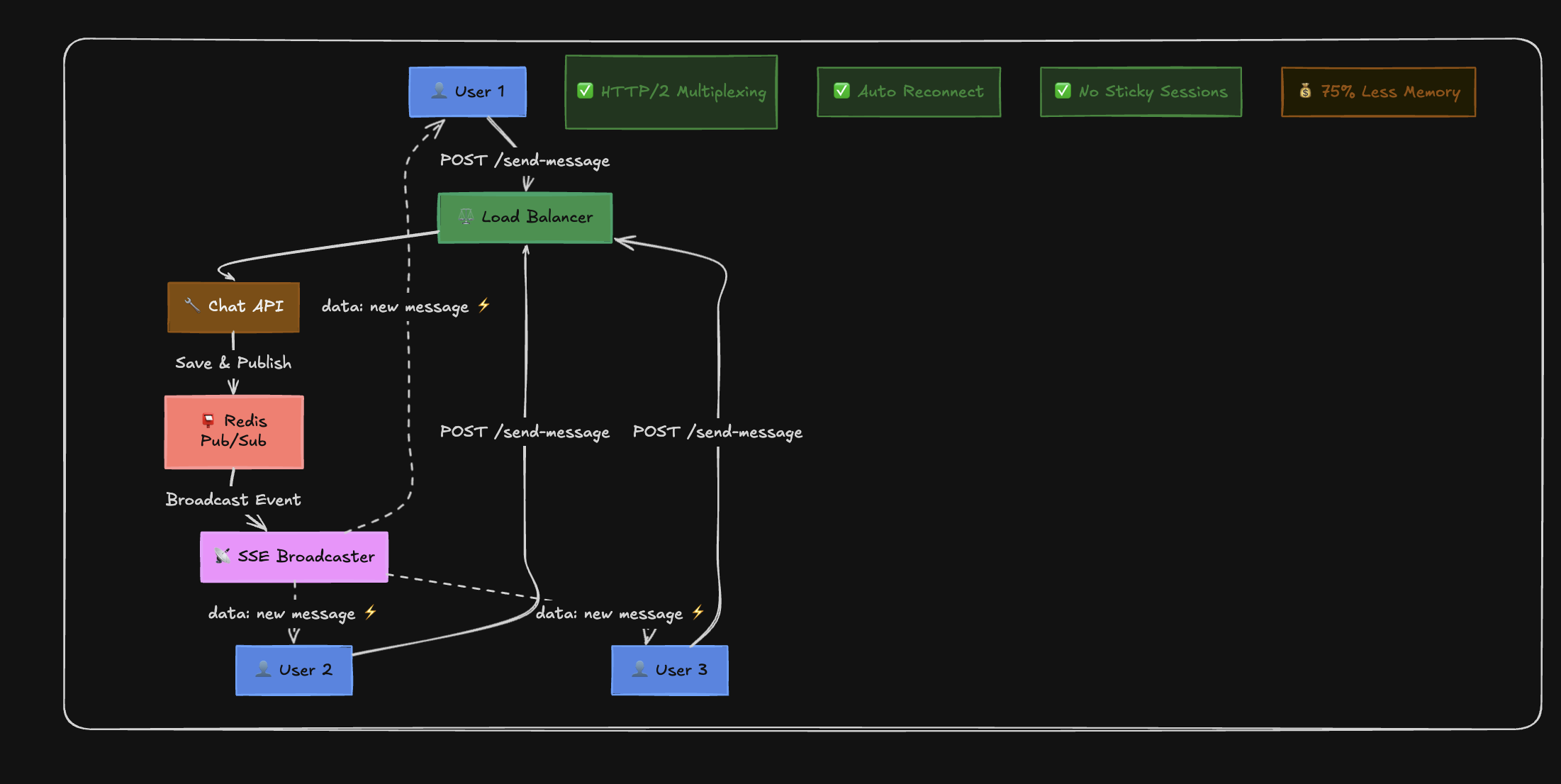
SSE + HTTP POST for Chat
Verdict: For most chat applications, SSE + POST is still more cost-effective!
The Hidden Costs of WebSockets
1. Sticky Sessions Nightmare
2. Scaling Complexity
3. Monitoring & Debugging
YouTube's Architecture Wins
Code Comparison: The Simplicity Factor
WebSocket Server (Complex)
SSE Server (Simple)
SSE is literally 4 lines vs 20+ lines for the same functionality!
The Bottom Line
SSE is the obvious choice.
WebSockets are great for:
- Real-time multiplayer games (constant bidirectional data)
- Collaborative editing (like Google Docs)
- Trading platforms (microsecond latency matters)
But for notifications, updates, and feeds? SSE saves millions while being simpler.
Takeaway for Your Projects
Rule of thumb: Start with SSE. Only upgrade to WebSockets when you have a proven need for bidirectional real-time communication.